Engineering leadership
Experience earns a seat. Context earns the team’s trust.
Why capable professionals can lose influence after joining an established team—and how observation, small contributions, and better timing turn expertise into useful change.
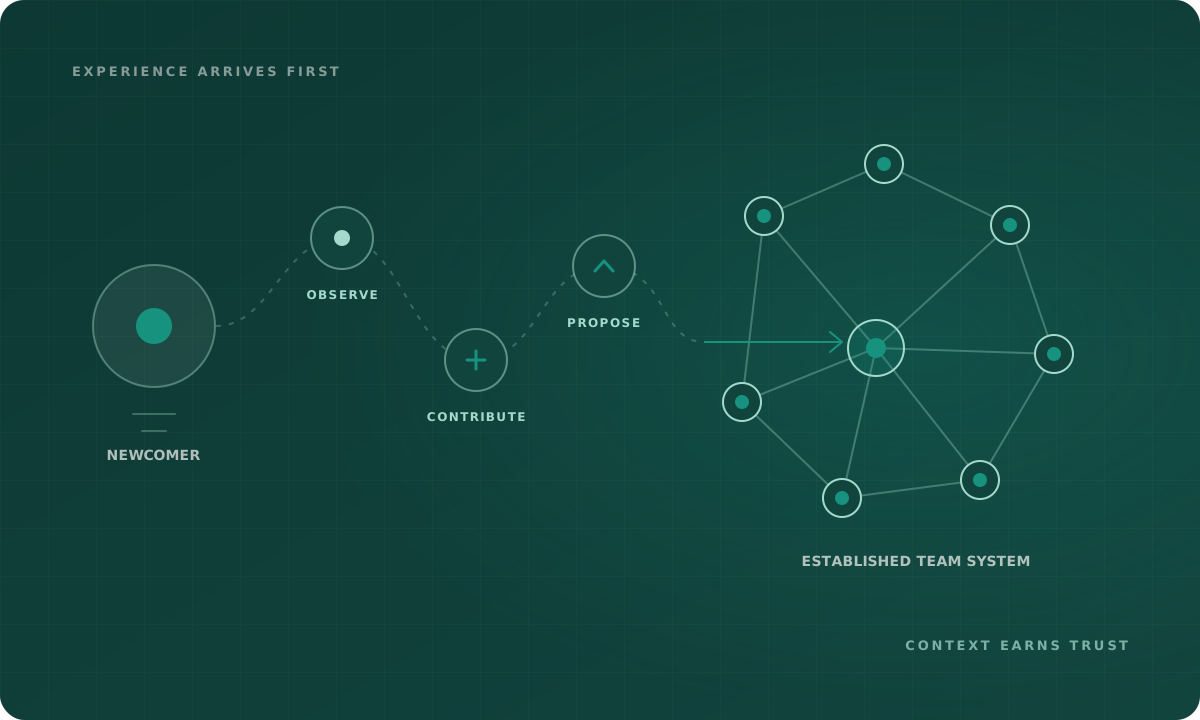
An experienced professional can recognize a familiar failure pattern in a new team within days. The dangerous assumption is believing that recognizing the pattern also means understanding why this team lives with it.
By the time a new person arrives, the product, architecture, practices, and culture already contain years of decisions. Some are deliberate. Some are compromises. Some are temporary fixes that became permanent because the next urgent thing arrived. Very little of that history is visible from the repository, the board, or the first architecture diagram.
This is why strong opinions can create resistance even when the intention is good. The newcomer believes they are contributing experience. The existing team may hear a judgement about work whose constraints have not yet been understood. The technical idea might be sound, but the relationship around the idea starts in deficit.
Seniority does not remove the context gap
Experience is valuable because it compresses patterns. A senior engineer has seen migrations stall, test suites decay, services couple themselves together, and process changes fail for reasons that were predictable in hindsight. That pattern recognition helps a new team—after it has been calibrated against the local system.
The local system is larger than the code. It includes customer commitments, production incidents, hiring constraints, release pressure, ownership boundaries, abandoned experiments, and the communication habits people developed to keep work moving. A proposal that ignores any one of these can be technically elegant and operationally impossible.
Experience supplies hypotheses. Context decides which of them deserve confidence.
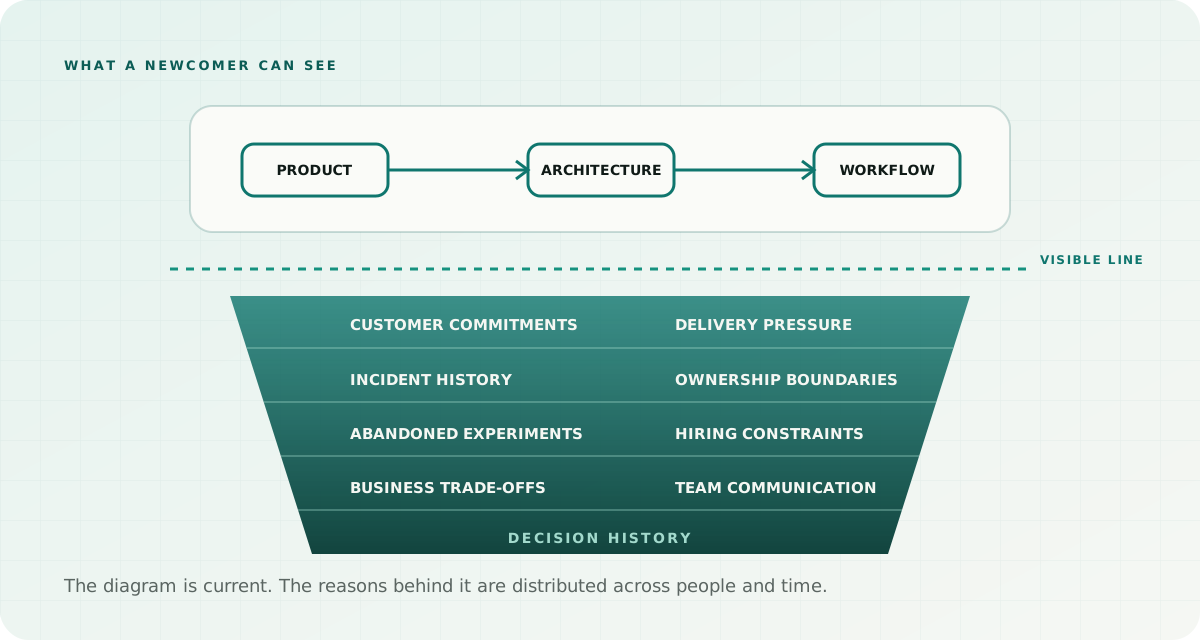
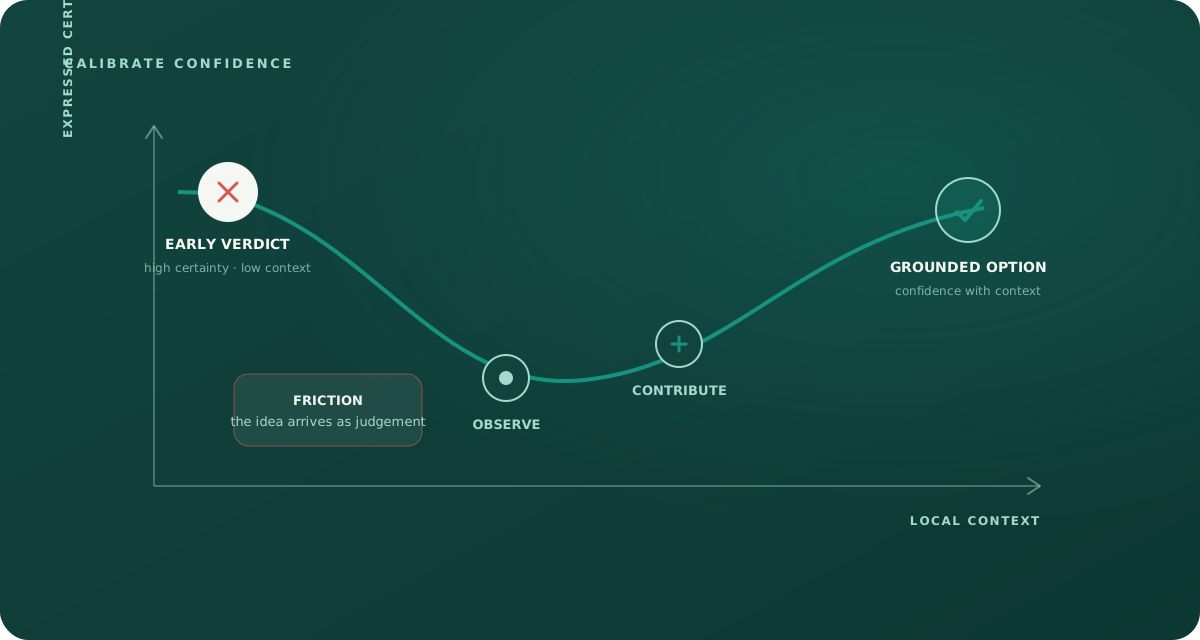
The early job is therefore not to suppress expertise. It is to change how confidently that expertise is expressed. Treat the first diagnosis as a question to investigate, not a verdict to announce.
Four ways good intent loses trust
Most early friction is not caused by a lack of intelligence or care. It comes from using the right capability at the wrong level of certainty.
- 01Feedback arrives before understanding
Without product, architectural, and historical context, useful observations can sound like criticism of the people who kept the system running.
- 02A new practice arrives as a mandate
A framework, testing strategy, or workflow may be valuable. Pushing it before learning the team’s pain makes adoption feel like compliance rather than relief.
- 03A solution ignores architectural history
The team may have considered the same design and rejected it because of dependencies, compatibility, cost, ownership, or a priority the newcomer cannot yet see.
- 04A product idea outruns domain knowledge
Without users, roadmap, business goals, and current pain points, an idea can remain vague. Repeating that pattern in front of stakeholders spends credibility quickly.
In each case, the content of the suggestion may be defensible. The failure is in the interface: too much certainty, too early, with too little acknowledgement of the knowledge already held by the team.
Observe the system behind the system
“Observe before changing” can sound passive. It should be active investigation. Read the architecture and then trace a real request through it. Read the roadmap and then ask which customer pressure shaped its order. Watch a release. Join an incident review. Notice where work waits, where information gets lost, and which people are repeatedly asked to translate between domains.
Questions are especially useful when they recover decision history without putting the team on trial:
- What constraint made this approach preferable when it was chosen?
- Which alternatives have already been tried or discussed?
- Where does this system create the most operational pain today?
- Which customer or business promise must not break?
- Who carries the cost when this part of the system fails?
These questions do more than fill a notebook. They reveal whether the apparent problem is a design choice, a temporary compromise, an ownership gap, or simply not important enough yet. They also show respect for the people who know the missing history.
A useful early rule
Ask more before suggesting more. When a suggestion does come, connect it to a pain the team already recognizes rather than to a practice the newcomer personally prefers.
Build trust in small, useful units
Trust grows fastest when the team can experience someone’s judgement at low risk. Fix a well-bounded bug. Improve a confusing runbook. Unblock a teammate. Add clarity to a test that fails without explanation. Help a release finish calmly. None of these actions announces a transformation, but each demonstrates care for the current system and the people operating it.
Small contributions also create better context. A bug fix exposes real data paths. A documentation change reveals which assumptions are shared and which exist only in one person’s memory. Supporting a release shows where the process is resilient and where it depends on heroics. Contribution and discovery happen in the same move.
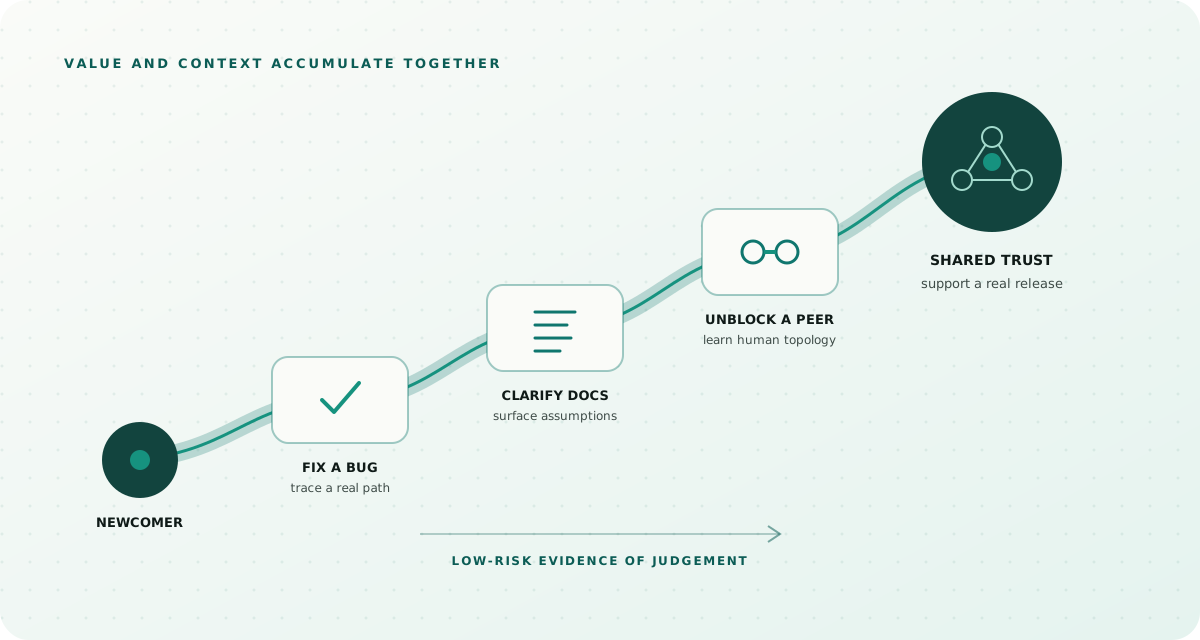
This is not about earning permission through performative busyness. The contribution should be genuinely useful and close enough to the team’s current priorities that its value is obvious. Reliability matters more than visibility.
Turn prescriptions into options
Language exposes how much context a proposal assumes. “We should replace this” closes the conversation around a conclusion. “One possible approach could be…” leaves room for missing information. “I may be missing context, but here is the trade-off I see…” makes uncertainty explicit without making the idea weak.
Presenting an option well still requires an opinion. Name the problem, the likely benefit, the cost, the migration or adoption burden, and the signal that would tell the team whether the change worked. Invite the people closest to the system to amend the model. That turns disagreement into additional context instead of a contest over authority.
A strong proposal should make collaboration easier, not make retreat more embarrassing.
This matters with people as much as with architecture. Learn who owns which decisions, who needs time to think, who prefers a written proposal, and who carries informal knowledge across teams. There is no single communication style that works with every colleague. Understanding the human topology is part of understanding the system.
Timing is part of the design
Not every good improvement is needed now. A test strategy can be worthwhile and still be the wrong priority during a customer migration. An architectural boundary can be cleaner and still create more near-term risk than the coupling it removes. A product idea can be compelling and still distract from a roadmap commitment the team must finish first.
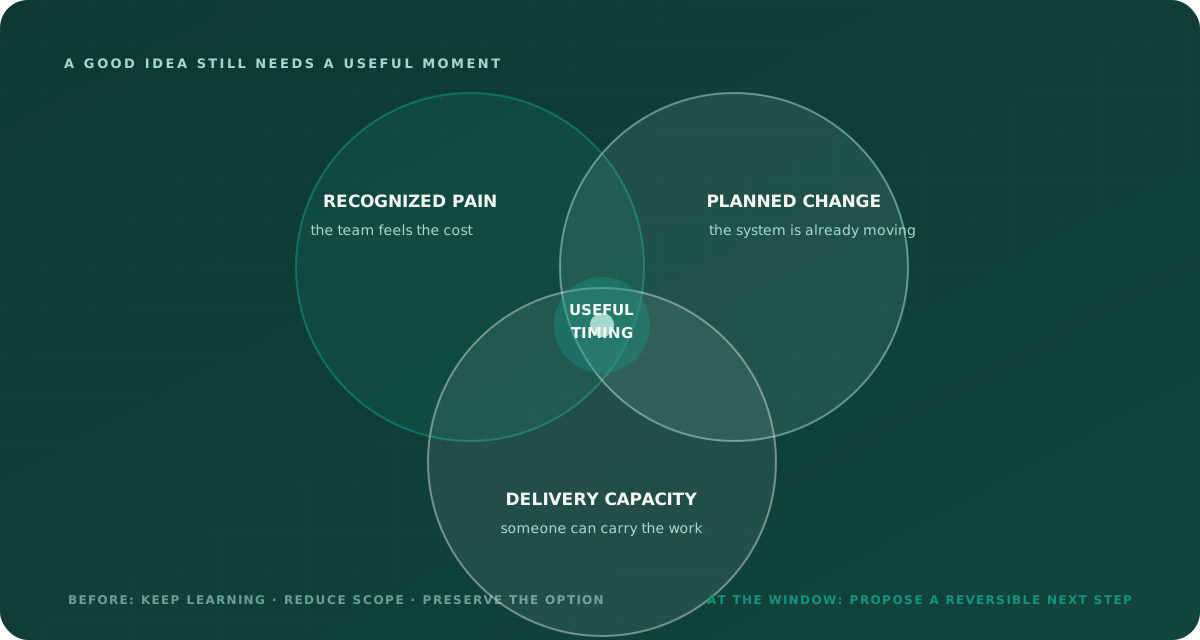
Timing changes the cost of adoption. The best moment is often when a recognized pain, a planned change, and enough delivery capacity meet. Until then, preserve the idea, sharpen the evidence, and look for a smaller reversible step. Patience does not mean forgetting the problem; it means preparing a proposal the team can actually use.
The second senior question
“Is this better?” is necessary. “Is this right for this team at this moment?” is what turns a technically better answer into responsible engineering judgement.
A practical loop for the first few weeks
Calendars differ, so this is a sequence rather than a rigid 30-, 60-, or 90-day plan. Move faster where risk is low and context is clear. Slow down where a proposal crosses ownership, product, or architectural boundaries.
- 01Map
Learn the product goals, system boundaries, ownership, current commitments, and the decisions that created today’s shape.
- 02Contribute
Choose a bounded task that matters now. Deliver it carefully and use the work to test your understanding of the team’s reality.
- 03Reflect
Compare your first assumptions with what the work revealed. Separate persistent problems from preferences and incomplete context.
- 04Propose
Frame one relevant improvement as an option, include costs and timing, and invite the owners of the problem to reshape it.
- 05Learn from the response
Adoption, hesitation, and rejection all carry information. Use that signal to improve the next contribution rather than simply increasing pressure.
The loop repeats. Context is never complete, and trust is not a one-time onboarding milestone. Each meaningful change creates new history that future teammates will need to understand.
Observation is not an excuse for silence
“Wait for context” has an important limit. A newcomer should not stay quiet about an immediate security risk, unsafe behavior, harassment, legal concern, or a failure likely to cause serious harm. Raise urgent concerns clearly, name what is known and unknown, and involve the appropriate owner. The cost of politeness is too high when the risk is immediate.
Teams can also misuse history to defend every habit. “We tried that before” is context, not a permanent veto. Constraints change. The mature response is to understand why an earlier attempt failed, show what is different now, and propose a reversible way to test the new conditions.
The goal is not to make an experienced professional smaller. It is to make their experience land. Observe enough to respect the system, contribute enough to become part of it, and propose change in a form the team can examine together. Influence built this way may arrive more quietly, but it lasts longer than the first strong opinion.